
Specialist shoulder injury Shockwave treatment in Highams Park.
Shoulder tendonitis (sometimes called rotator cuff tendonitis or biceps tendonitis, depending on which tendon is affected) is an inflammation or irritation of the tendons in the shoulder.
A tendon is a tough cord of fibrous tissue that connects muscle to bone. In the shoulder, tendons help stabilize the joint and allow you to lift, rotate, and move your arm. When these tendons become irritated or inflamed, it causes pain and reduced mobility.
Symptoms include;
-
Dull or aching pain in the shoulder, especially with movement
-
Pain at night (often when lying on the affected side)
-
Swelling or tenderness around the joint
-
Limited range of motion or weakness when lifting or
rotating the arm
If untreated, shoulder tendonitis can progress to tendinosis (chronic degeneration) or contribute to rotator cuff tears.
Specialist shoulder injury Shockwave treatment in Highams Park can help to speed up the recovery of shoulder injuries and get you back to your activities much quicker.

What are the main causes of shoulder injuries?
Shoulder injuries are common because the shoulder is very mobile but not as stable as other joints. The main causes usually fall into a few categories:
.jpeg)
1. Overuse and repetitive motion
Doing the same shoulder movements over and over can strain
muscles and tendons.
-
Sports like swimming, baseball, tennis, and volleyball
-
Repetitive lifting or reaching (common in some jobs)
-
Poor technique or posture during activities
2. Trauma or sudden injury
A strong force can damage the shoulder suddenly.
-
Falling on an outstretched arm
-
Direct blows or collisions (contact sports, accidents)
-
Lifting something too heavy all at once
3. Muscle weakness or imbalance
If some shoulder or upper-back muscles are weak or tighter
than others, the joint may not move correctly.
-
Weak rotator cuff or shoulder blade muscles
-
Tight chest or neck muscles
-
Lack of proper warm-up or conditionin

4. Poor posture
Long periods of slouching or rounded shoulders can put extra stress on the shoulder joint.
-
Sitting hunched over phones or computers
-
Forward head posture
5. Limited flexibility or mobility
Stiff muscles or joints can increase injury risk.
-
Tight shoulders or upper back
-
Reduced range of motion from inactivity or previous injury
6. Not allowing enough recovery
-
Playing or training through pain
-
Not resting after intense activity or a minor injury
We can speed up your recovery from Shoulder injuries with a combination of Myofascial release, Radial and Focused Shockwave Therapy within the same sessions.
Depending on whether it is Acute or Chronic, 3 - 6 sessions are generally required for most people to gain complete pain relief and make a full recovery from Shoulder injuries.
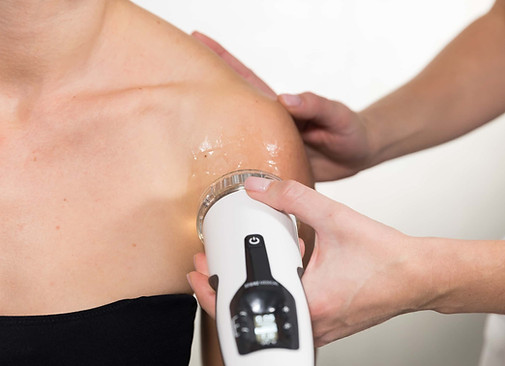
The effective way - to treat MSK.
Shoulder conditions Shockwave Therapy is commonly used for;
-
Calcific rotator cuff tendinitis
-
Rotator cuff tendinopathy (chronic overuse injuries)
-
Shoulder impingement–related tendon pain
-
Some cases of frozen shoulder
How Shockwave Therapy helps with Shoulder injuries.
1. Stimulates healing
Increases blood flow to the injured tissue. Encourages the body to release growth factors. Promotes cell repair and regeneration, especially in tendons
2. Reduces pain
Temporarily desensitizes pain receptors. May interrupt chronic pain signals. Helps reset pain pathways in long-standing injuries
3. Breaks down calcifications
Particularly useful for calcific tendinitis of the shoulder. Shockwaves can help break up calcium deposits so the body can reabsorb them
4. Improves tendon structure
Encourages remodeling of damaged tendon fibers. Can help with stiffness and limited range of motion over time

Why choose Rich & Cher Pearson at The Shockwave Therapy Clinic?
-
Elite technology: We use the Storz Medical Focused Shockwave system - the gold standard used by Premier League football clubs and elite athletes worldwide.
-
Decades of experience: You aren't just getting a treatment; you are getting 25 years of clinical diagnostic skill (See our feedback)
-
Local and personal: We are a dedicated East London clinic. Rich and Cher provide a private, professional, and patient-focused environment right here in Highams Park.
-
Proven results: Whether you are looking to return to sport or seeking a discreet solution for ED, our evidence-based approach is designed to get you results fast.
Frequently Asked Questions about Shockwave Therapy for Shoulder Injuries & Calcific Tendonitis.
How does Focused Shockwave therapy treat Calcific Tendonitis?
Focused Shockwave Therapy uses high-energy acoustic waves to target calcium deposits within the shoulder tendons. The treatment works by mechanically breaking down the calcification and stimulating a biological resorptive process. In our Highams Park clinic, this non-invasive approach is a proven alternative to surgical "barbotage" or needle aspiration.
How many sessions are needed for Shoulder Tendonitis recovery?
Most patients require 3 to 6 sessions of Focused Shockwave. While some relief from "night pain" is often reported after the first 2 sessions at our London E4 clinic, the biological process of breaking down and absorbing calcium deposits continues for several weeks after the final treatment.
Is Shockwave Therapy successful for Frozen Shoulder?
Yes, Shockwave Therapy is an excellent tool for "thawing" a frozen shoulder (adhesive capsulitis). By reducing inflammation and increasing local blood circulation, it helps to restore range of motion and reduce the intense pain associated with the freezing and frozen stages of the condition.
Can I drive after having Shockwave Therapy on my shoulder?
Yes. Unlike invasive injections, there is no local anesthesia or downtime required. You can drive yourself home from our Highams Park clinic immediately after your appointment. We simply recommend avoiding heavy lifting or overhead sports for 48 hours to allow the initial healing response to settle.